
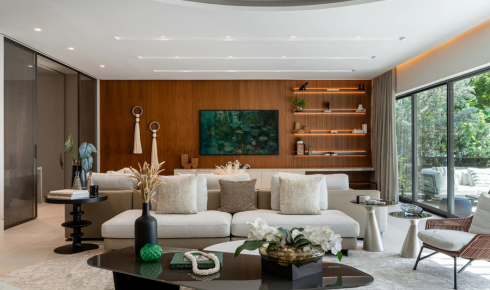

There’s a quiet confidence to a well-designed home. You feel it before you notice it. The proportions are right. The light behaves the way it should. Nothing feels forced, yet nothing feels accidental either. This is the difference between a space that looks good and one that lives well. And it’s why truly thoughtful design has less to do with trends—and everything to do with intention.
When people hear the phrase high-end interiors, they often imagine luxury finishes and dramatic statements. And yes, quality materials matter. Craftsmanship matters. But the real marker of elevated design is restraint, clarity, and an understanding of how people actually move through a space. The best interiors don’t shout. They speak quietly and stay with you.
What “High-End” Really Means Today
High-end doesn’t mean cold or untouchable. In fact, the most compelling homes today feel warm, personal, and deeply human. They’re layered rather than loud. Comfortable rather than stiff. You might notice the hand-finished woodwork, the way stone feels underfoot, or how a room holds sound just right—but none of it exists just to impress.
True luxury is ease. It’s a kitchen where everything is exactly where your hand expects it to be. A living room that invites conversation without trying too hard. A bedroom that gently pulls you into rest. These details don’t come from shopping lists; they come from understanding lifestyle, habits, and priorities.
Why Portfolios Matter More Than Promises
Anyone can say they do great work. What really tells the story is what they’ve already built. Browsing residential portfolios is like reading between the lines of a designer’s mind. You see patterns. Preferences. The way they solve problems and handle constraints.
A strong portfolio isn’t just a highlight reel of glamorous photos. It shows range. It shows consistency. It shows that the designer can adapt to different clients, different homes, different challenges—without losing their sense of balance. Look closely and you’ll notice whether spaces feel livable or overly staged, timeless or trend-chasing.
Most importantly, a good portfolio helps you answer a simple question: Can I imagine my life here?
The Stories Behind the Spaces
Photos alone don’t tell the full story. That’s where design case studies come in. They reveal the thinking behind the choices—the why, not just the what. A case study might explain how a narrow floor plan was opened up without losing intimacy, or how an old home was modernized while honoring its original character.
These stories matter because real projects are rarely straightforward. Budgets shift. Structures surprise you. Clients change their minds. Designers who document their process show confidence and transparency. They’re not just showing outcomes; they’re showing judgment.
And judgment—knowing when to push, when to pull back, when to simplify—is the quiet skill that separates good design from great design.
Taste Is Personal, Quality Is Universal
One of the most interesting things about elevated residential design is how varied it can be. Two homes can be completely different in style—one minimalist and modern, the other layered and traditional—yet both feel equally refined. That’s because quality transcends aesthetics.
Proportion. Scale. Light. Material honesty. These elements work in any style. When they’re handled well, the space feels grounded and calm. When they’re ignored, even expensive finishes can feel off.
High-end design doesn’t rely on constant novelty. It relies on fundamentals executed beautifully.
Living With Design, Not Around It
A home isn’t a museum. The best designers understand that a space should support life, not compete with it. That means designing for wear, movement, and change. It means allowing rooms to evolve as families grow, routines shift, and tastes mature.
A well-designed home feels better over time, not worse. Materials age gracefully. Layouts remain flexible. Nothing feels precious in a way that makes you nervous to use it. That’s a subtle but powerful marker of quality.
Choosing Depth Over Hype
In a world full of fast inspiration and endless scrolling, it’s tempting to chase what’s new. But the homes that truly endure—the ones people love for decades—are built on depth, not hype. They’re informed by context, collaboration, and a willingness to slow down and get things right.
If you’re exploring designers or studios, don’t just look for wow moments. Look for thoughtfulness. Look for evidence of listening. Look for projects that feel calm, resolved, and quietly confident.
Because the goal isn’t to impress strangers. It’s to create a place where life unfolds naturally and beautifully.
The Takeaway
Great residential design isn’t about perfection. It’s about alignment—between the space and the people who live in it. Whether you’re drawn to understated luxury or expressive character, the best interiors share a common thread: they’re intentional, considered, and deeply human.
When you understand what defines quality—beyond surface-level glamour—you start to see design differently. And once you see it, you can’t unsee it.