Not every cracked or uneven concrete slab needs to be torn out and replaced. Often the issue is not the concrete itself but the ground beneath it. As the Cedar Rapids soil shifts, driveways, sidewalks, and patios can begin to sink, leaving uneven and uncomfortable surfaces. Before committing to a full replacement, it’s worth finding out whether mudjacking in Cedar Rapids, IAcan solve the problem instead. In many cases, it can.
What Makes Mudjacking a Better Choice Than Concrete Replacement?
People often assume that once concrete starts sinking, replacement is the only option. That’s not always true. Sometimes the slab is perfectly usable, and the real problem is underneath it. If the slab is still in good shape, there’s often no reason to start from scratch.
A. The Concrete Is Structurally Sound but Has Settled
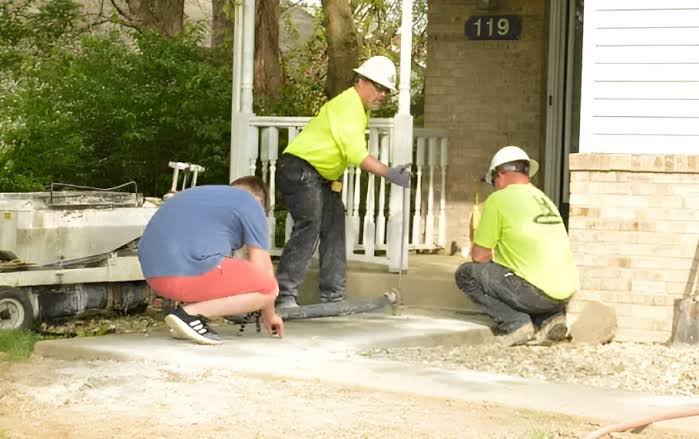
A driveway can sink without actually wearing out. The same goes for sidewalks and patios. If the concrete hasn’t broken apart and the surface is still in decent condition, replacing it can be more work than necessary. In many cases, the soil underneath has simply settled over time. In mudjacking, the material is pumped underneath the slab, filling the empty space and lifting the concrete back where it belongs.
B. Repairs Need to Be Completed Quickly
Replacing concrete usually means demolition first, then pouring new concrete, followed by curing time before it’s ready for regular use. Mudjacking is a much shorter process because a mudjacked slab can typically be used almost immediately. If you need the area back in use quickly, that alone can make mudjacking the better option.
C. Homeowners Want to Minimize Costs and Disruption
There’s also the practical side of it. Pulling out a slab creates noise, dust, heavy equipment, and a much bigger job overall. If replacement isn’t actually necessary, most homeowners would rather avoid all of that. That’s why many homeowners look at mudjacking before they think about replacement. It restores the surface they already have instead of replacing it, which often means less disruption around the property and a lower repair bill.
When Is Concrete Replacement the Better Solution?
Not every slab can be saved, though. Sometimes replacement is simply the better call. If the concrete itself has deteriorated beyond repair, lifting it won’t solve the underlying problem.
A. The Concrete Is Severely Cracked or Broken
Hairline cracks aren’t unusual, but there’s a difference between normal aging and concrete that’s falling apart. When large sections have broken away, or the slab has split into multiple pieces, there’s very little left to restore. In that situation, replacing the concrete is usually the smarter investment.
B. The Slab Has Extensive Structural Damage
Years of water exposure, shifting ground, heavy vehicles, or repeated Iowa winters can gradually weaken a slab from the inside out. Even if it could be lifted back into place, it may not have the strength it once did. At that point, lifting the slab doesn’t fix the real problem. A new slab is usually the more reliable option.
C. The Existing Concrete Has Reached the End of Its Service Life
Sometimes you can tell a slab has had a long life. The surface is worn, repairs have already been made more than once, and new cracks keep showing up in different places. At that point, continuing to patch or lift the concrete often becomes a temporary fix. Starting with a new slab is usually the better long-term decision.
Conclusion
There’s no single answer that works for every driveway, patio, or sidewalk. Ultimately, the decision is based on the condition of the concrete. If the slab is still solid and the issue is caused by settling underneath, mudjacking in Cedar Rapids, IA, can often restore it without the cost and disruption of replacement. A quick inspection usually tells the story. Once you know whether the concrete is still sound, deciding between lifting it or replacing it becomes much easier.