
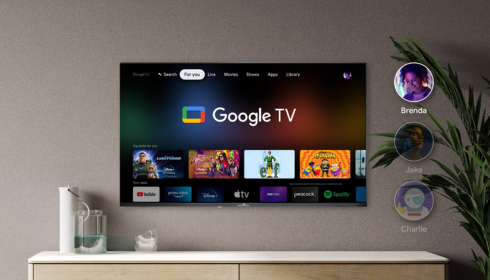

Google TV represents a sophisticated evolution in smart television platforms, designed to centralize and personalize entertainment experiences. Launched initially in 2020 as an interface overhaul for existing Android-based systems, it quickly established itself as a content-focused ecosystem. Unlike traditional smart TV operating systems that prioritize individual applications, Google TV aggregates recommendations from multiple streaming services into a unified homepage. This approach draws on user viewing habits to suggest movies, shows, and live content, reducing the fragmentation common in fragmented subscription landscapes.
At its foundation, Google TV builds upon the Android TV framework but introduces a more intuitive layer that emphasizes discovery over navigation. Devices running this platform, including dedicated streamers and integrated smart televisions, benefit from seamless integration with Google’s broader services, such as voice commands and casting capabilities. By 2025, it powers hundreds of millions of active devices worldwide, reflecting its widespread adoption among manufacturers and consumers alike.
Distinguishing Google TV from Its Predecessor
A common point of clarification involves the relationship between Google TV and Android TV. While both stem from the same underlying operating system, Google TV serves as a refined user interface layered on top. Android TV traditionally features an app-centric layout, where users browse rows of installed applications to access content. In contrast, Google TV shifts the focus to content itself, presenting personalized rows like “For You,” “Continue Watching,” and genre-specific suggestions that pull from various subscribed platforms.
This content-driven design enhances efficiency, allowing users to locate titles without switching between apps repeatedly. Additional refinements include robust support for multiple user profiles, enabling tailored recommendations for different household members, and enhanced parental controls for family-friendly viewing. As newer devices transition fully to Google TV, older Android TV models receive partial updates to mimic some of these elements, though full feature parity remains exclusive to the modern interface.
Standout Capabilities Driving User Engagement
The platform’s strength lies in its ability to curate entertainment intelligently. Central to this is a sophisticated recommendation engine that analyzes watch history across services to surface relevant options. Integration with live TV providers further expands its utility, offering guides for over-the-air channels or subscription-based linear programming.
Voice interaction has long been a hallmark, but recent advancements elevate it significantly. Users can issue commands to search for specific genres, control playback, or even manage connected smart home devices directly from the television screen. Casting from mobile devices remains effortless, turning any compatible screen into an extension of smartphones or tablets. These elements combine to create a versatile hub that extends beyond mere video playback into broader home automation.
Revolutionary AI Enhancements Transforming Interaction
By late 2025, the integration of advanced artificial intelligence marks a pivotal shift. Replacing traditional voice assistance with a more capable model enables natural, conversational exchanges. Users can pose complex queries, such as requesting family-friendly films with specific themes or explanations of scientific concepts simplified for children, receiving responses accompanied by relevant video clips.
This AI layer extends to creative and informational tasks, generating custom artwork, summarizing news briefs, or planning activities like travel itineraries. An ambient mode introduces contextual widgets that activate upon approach, displaying personalized information such as weather updates or calendar reminders. Hands-free operation becomes viable on supported hardware through built-in microphones and sensors, minimizing reliance on remotes for everyday commands.
Such developments position the television as an interactive companion rather than a passive display, blending entertainment with practical utility in daily routines.
Hardware Ecosystem and Manufacturer Collaborations
Adoption spans a diverse range of devices, from affordable streaming boxes to premium smart televisions. Key partners include established brands producing high-end models with advanced display technologies, alongside value-oriented lines that democratize access to the platform.
Standalone streamers offer compact solutions for upgrading non-smart displays, while integrated sets from various manufacturers ensure broad availability across price points. This collaborative approach has expanded the platform’s reach, with ongoing updates delivering new functionalities to compatible hardware. Sustainability efforts in production and energy efficiency further align with modern consumer expectations.
Influence on the Broader Streaming Landscape
In an era dominated by subscription overload, Google TV addresses key pain points by fostering unified discovery. Its emphasis on cross-service aggregation encourages sustained engagement, potentially reducing churn as users find content more readily. The push toward AI-driven personalization sets a benchmark, influencing competitors to enhance their own interfaces with similar intelligent features.
Market dynamics reflect growing preference for platforms that simplify navigation amid proliferating options. By serving as a neutral aggregator, it supports a healthy ecosystem where multiple providers coexist, benefiting viewers through comprehensive access without favoritism.
Emerging Directions in Personalized Home Entertainment
Looking ahead, the trajectory points toward deeper immersion and multifunctionality. Enhanced AI could enable proactive suggestions based on contextual cues, while expanded smart home controls solidify the television’s role as a household command center.
Potential explorations into generative tools, such as on-screen content creation or interactive learning experiences, hint at blurring lines between viewing and participation. As hardware evolves with better sensors and processing power, seamless, voice-first interactions may become the norm, redefining how families gather around screens.
Ultimately, these advancements signal a maturing phase where smart televisions evolve into intelligent portals, adapting to individual preferences and integrating fluidly into connected lifestyles. This progression not only elevates streaming but reimagines the central screen’s potential in modern homes.