Water is one of those everyday things most of us barely think about—until something seems off. Maybe the tap water suddenly has a metallic taste. Perhaps there’s a chalky film around the showerhead, cloudy spots on freshly washed glasses, or a faint smell that makes you hesitate before filling your bottle. These little annoyances can be easy to ignore, but they’re often worth paying attention to.
Choosing a water treatment system, though, isn’t as simple as grabbing the biggest filter at the store. Different homes have different water, and different water brings its own set of problems. What works beautifully for one family may do almost nothing for the house next door.
Start With What’s Actually in the Water
Before buying equipment, it helps to know what you’re dealing with. That sounds obvious, but plenty of people skip this part. They notice hard-water stains and immediately buy a softener, or dislike the taste and assume a basic carbon filter will solve everything.
A proper water test gives you a clearer picture. Depending on the source, testing may identify hardness minerals, iron, manganese, chlorine, sediment, pH issues, nitrates, bacteria, or other substances. Understanding your home’s water quality makes it much easier to choose treatment based on evidence rather than guesswork.
Municipal water and private well water can also require very different approaches. City water is generally treated before reaching the home, although homeowners may still want to address chlorine taste, hardness, sediment, or other concerns. Well owners are responsible for their own systems and usually need to be more proactive about testing.
Certification Is More Than a Logo on the Box
Water treatment products tend to come covered in claims. Cleaner water. Better taste. Advanced filtration. Premium purification. Some claims are meaningful; others are mostly packaging.
Independent certification can help separate the two.
When a product is nsf certified, it generally means the product has been evaluated against applicable NSF standards for specific performance, safety, or contaminant-reduction claims. The important detail is the specific certification and what it covers. A certification shouldn’t be treated as proof that a product removes every possible contaminant.
That distinction matters. Two filters sitting beside each other on a shelf might look almost identical while being designed for completely different jobs. Checking the actual certification and reduction claims can tell you far more than the front label.
One Filter Usually Can’t Fix Everything
There’s a temptation to look for one magical machine that solves every water problem. In reality, residential treatment often works better as a combination of technologies.
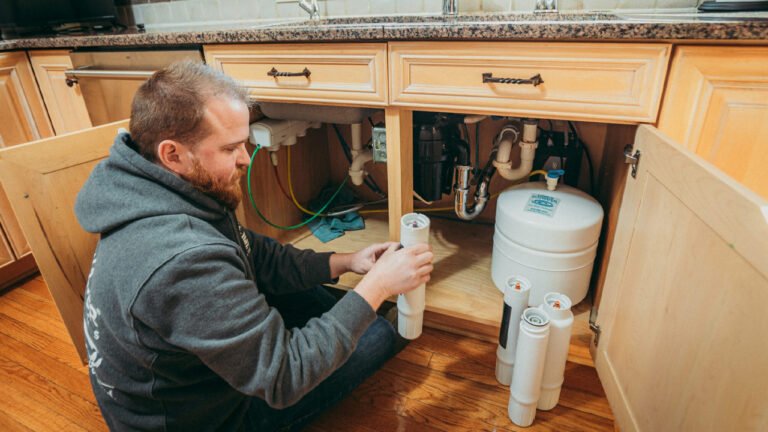
Sediment filtration can catch particles such as sand, rust, and debris. Activated carbon is commonly used to improve taste and odor and reduce certain substances such as chlorine. Water softeners address hardness minerals that contribute to scale buildup. Reverse osmosis systems can provide more intensive filtration for drinking and cooking water, depending on the system.
Sometimes a house needs only one of these. Sometimes it needs several.
A family dealing primarily with hard water, for example, may care more about protecting plumbing, fixtures, and appliances than installing advanced drinking-water filtration throughout the entire house. Another household might have reasonably soft water but dislike its taste and want treatment mainly at the kitchen sink.
The right setup depends on the problem—not on how impressive the equipment looks.
Think About the Whole House, Not Just the Kitchen
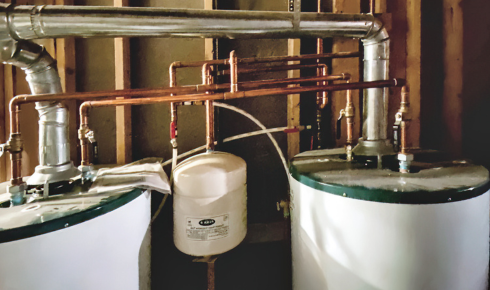
Drinking water naturally gets most of the attention, but water is used everywhere. It runs through the water heater, washing machine, dishwasher, faucets, toilets, showerheads, and plumbing lines every day.
Hardness and sediment can gradually affect fixtures and appliances. Scale may collect around faucets and showerheads. Soap may not lather the way you expect. Glassware can come out of the dishwasher looking as if it was never properly cleaned. None of these problems feels dramatic on its own, yet together they can become surprisingly irritating.
This is where experienced water treatment experts can be useful. Rather than recommending equipment from symptoms alone, they can evaluate test results, household water usage, plumbing conditions, available installation space, and the homeowner’s actual priorities.
Don’t Forget the Cost After Installation
The purchase price is only part of what a treatment system costs.
Filters need replacing. Salt-based softeners need salt. Reverse osmosis systems require periodic filter and membrane maintenance. Some equipment uses electricity, and practically every system benefits from occasional inspection.
Before choosing anything, ask how often consumables need replacement and what those replacements cost. Also check whether filters are readily available. A cheap system becomes considerably less attractive if replacement cartridges are expensive or difficult to find a year later.
Capacity matters too. A system that works nicely for two people may struggle in a busy household where showers, laundry, dishwashing, and cooking happen around the same time.
Maintenance Makes a Bigger Difference Than People Expect
Even excellent equipment performs poorly when neglected. Filters left in service too long may experience reduced flow or diminished performance. A softener that isn’t maintained properly won’t magically keep doing its job forever.
It’s worth keeping a simple maintenance schedule. Nothing elaborate—just note installation dates, filter-change intervals, service recommendations, and any changes you notice in taste, odor, pressure, or appearance.
Retesting the water periodically can also make sense, particularly for private wells or whenever there’s a noticeable change. Water conditions aren’t necessarily frozen in time.
Better Water Starts With Better Questions
The smartest water treatment decision usually isn’t the most expensive one. It’s the one that addresses the actual conditions in the home without adding equipment that serves no real purpose.
Start with testing. Understand the results. Look carefully at certifications and verified performance claims. Consider maintenance, household demand, and long-term costs before making a decision.
Good water treatment can be pleasantly uneventful. You turn on the faucet, fill a glass, run the dishwasher, take a shower—and simply don’t have to think much about the water anymore. In a way, that’s exactly what a well-chosen system should accomplish.